


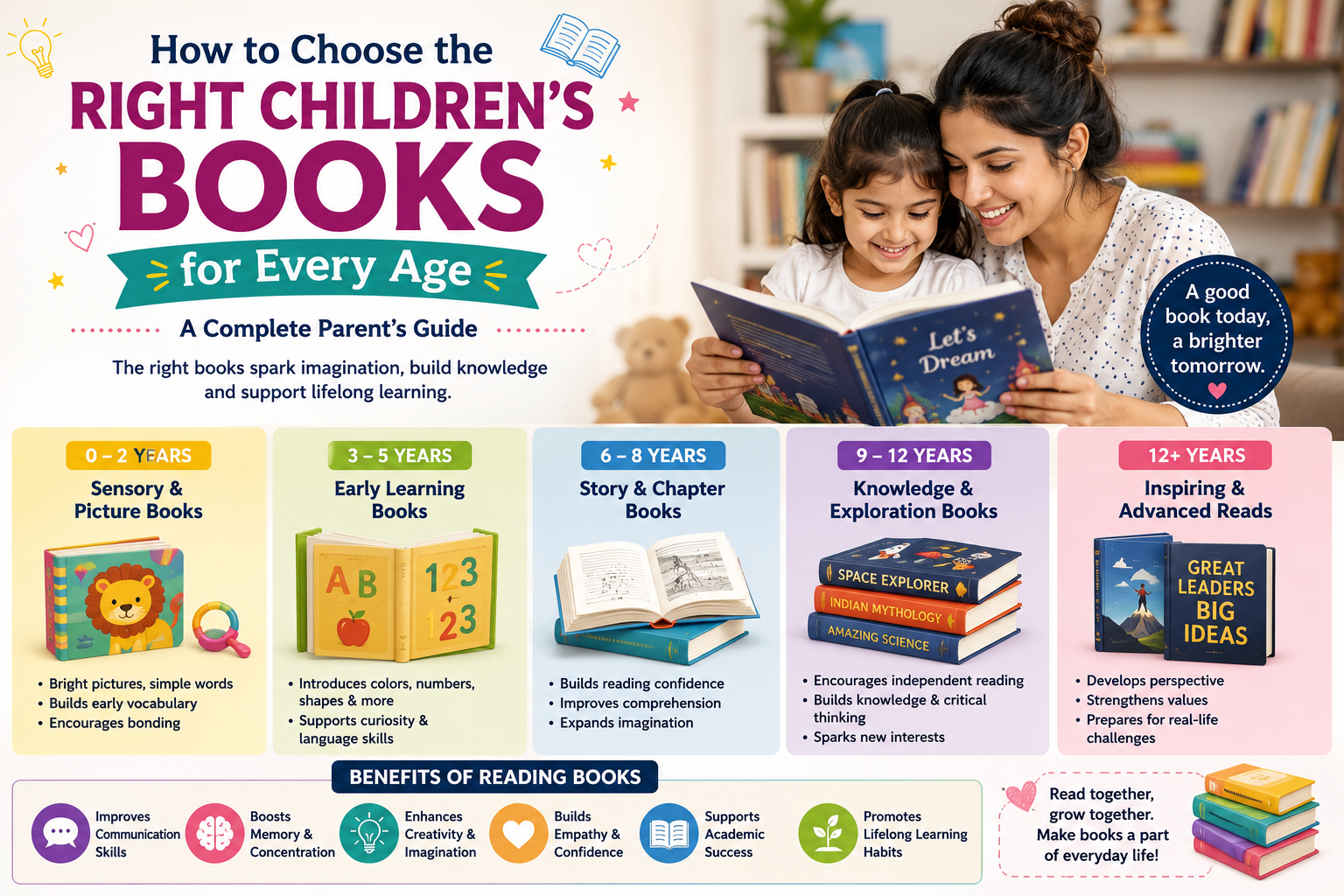
Choosing the right Children's Books is one of the most valuable investments parents can make in their child's future. Books do much more than entertain—they inspire curiosity, improve language skills, build creativity, and play a vital role in Child Development. From a baby's first picture book to engaging novels for pre-teens, selecting age-appropriate books helps children develop a lifelong love for reading.
With thousands of options available today, finding the perfect book can feel overwhelming. Understanding your child's age, interests, and developmental stage makes the process much easier. This complete guide will help you choose the best Learning Books and storybooks that support your child's educational and emotional growth.
Why Children's Books Matter
Books are among the first tools children use to understand the world around them. Reading regularly introduces new words, teaches valuable life lessons, and encourages imagination.
Some of the biggest benefits of reading include:
- Improves vocabulary and language skills
- Encourages creativity and imagination
- Supports emotional intelligence
- Builds concentration and memory
- Develops problem-solving abilities
- Strengthens parent-child bonding
- Creates healthy reading habits from an early age
The right Children's Books can shape a child's confidence, curiosity, and love for learning.
Choosing Books by Age
Every stage of childhood requires different types of books. Selecting books according to developmental milestones ensures children remain interested while learning effectively.
Birth to 2 Years: Bright and Interactive Books
Babies respond best to colorful visuals and simple language.
Look for:
- Board books
- Cloth books
- High-contrast images
- Animal books
- Alphabet books
- Books with textures
- Rhyming stories
Reading aloud during infancy supports early Child Development, language recognition, and emotional bonding.
Benefits
- Improves listening skills
- Builds early vocabulary
- Encourages visual recognition
- Strengthens parent-child interaction
Ages 3–5 Years: Picture Books and Early Learning
Preschoolers become curious about everything around them. This is the perfect time to introduce Learning Books that combine education with fun.
Choose books covering:
- Colors
- Numbers
- Shapes
- Animals
- Nature
- Good manners
- Festivals
- Family values
Interactive stories with engaging illustrations keep children interested while developing reading confidence.
Benefits
- Develops communication skills
- Builds imagination
- Improves attention span
- Encourages curiosity
Ages 6–8 Years: Independent Readers
Children in primary school begin reading on their own.
Look for:
- Short story collections
- Folk tales
- Adventure stories
- Moral stories
- Science books
- Beginner chapter books
Books that match school learning while remaining entertaining encourage regular reading habits.
Benefits
- Enhances comprehension
- Builds confidence
- Improves critical thinking
- Strengthens reading fluency
Ages 9–12 Years: Knowledge and Exploration
Older children enjoy stories with interesting characters, exciting adventures, and educational topics.
Choose books about:
- History
- Science
- Space
- Nature
- Mythology
- Biographies
- Mystery
- Creative thinking
These Children's Books encourage independent learning and broaden a child's perspective.
Benefits
- Encourages analytical thinking
- Develops research skills
- Improves writing abilities
- Increases general knowledge
Consider Your Child's Interests
Children enjoy reading more when books match their interests.
Ask yourself:
- Does your child love animals?
- Are they interested in space?
- Do they enjoy fairy tales?
- Do they like puzzles?
- Are they curious about science?
- Do they enjoy mythology?
Choosing books based on hobbies creates excitement around reading and encourages children to finish books independently.
Educational Value Matters
Not every educational book needs to feel like a textbook.
The best Learning Books teach through stories, activities, puzzles, and engaging illustrations.
Look for books that help children:
- Learn new words
- Understand emotions
- Solve problems
- Develop creativity
- Improve observation skills
- Build confidence
Books that combine learning with entertainment create meaningful reading experiences.
Look for High-Quality Illustrations
Illustrations are especially important for younger readers.
Bright, colorful images help children:
- Understand stories
- Remember concepts
- Stay engaged
- Build imagination
Beautiful illustrations also make reading more enjoyable and encourage repeated reading.
Encourage Diversity in Reading
A balanced reading collection introduces children to different topics and perspectives.
Include:
- Storybooks
- Fairy tales
- Mythological stories
- Poetry
- Activity books
- Science books
- Nature books
- Value-based stories
A variety of Children's Books supports well-rounded Child Development.
Build a Daily Reading Routine
Consistency is more important than reading for long hours.
Simple habits include:
- Reading before bedtime
- Weekend family reading
- Visiting libraries
- Creating a reading corner
- Discussing stories together
Children who see reading as a fun family activity often develop lifelong reading habits.
Why Learning Books Are Essential
Today's children need more than academic knowledge.
Well-designed Learning Books help develop:
- Communication skills
- Creativity
- Logical reasoning
- Decision-making
- Social awareness
- Emotional intelligence
These skills benefit children both inside and outside the classroom.
Tips for Parents When Buying Children's Books
Before purchasing books, consider the following:
- Check the recommended age group.
- Read reviews from other parents.
- Choose books with simple, engaging language.
- Look for durable, child-friendly materials.
- Select books that match your child's interests.
- Include educational and recreational books.
- Update your child's collection as they grow.
Investing in quality books today creates stronger readers tomorrow.
Benefits of Reading Children's Books Regularly
Reading every day provides long-term advantages for both learning and personal growth.
Some key benefits include:
- Improves vocabulary
- Builds confidence
- Supports brain development
- Encourages independent thinking
- Enhances creativity
- Strengthens memory
- Develops empathy
- Reduces screen time
- Promotes better communication
- Supports academic success
These benefits make reading one of the most effective tools for healthy Child Development.
Final Thoughts
Selecting the right Children's Books isn't about buying the most popular titles—it's about choosing books that match your child's age, interests, and learning needs. From colorful picture books for toddlers to engaging chapter books for older children, every book contributes to intellectual, emotional, and social growth.
Adding thoughtfully selected Learning Books to your child's daily routine encourages curiosity, creativity, and confidence while supporting lifelong learning. As children grow, books become trusted companions that help them understand the world, express themselves, and dream bigger.
When parents make reading a regular habit, they give their children one of the greatest gifts—a love for knowledge that lasts a lifetime.
Recommended for you
View all stories
Sacred Places in India: Discover the Divine Energy and Spiritual Significance of Ancient Dev Sthals
This blog explores the spiritual significance of India's ancient Dev Sthals, highlighting how these Sacred Places and Hindu Temples offer divine energy, cultural heritage, and inner peace. It also explains the benefits of visiting these holy sites, their historical importance, and why they continue to inspire millions of devotees and spiritual travelers.

How Divine Accessories Enhance Your Daily Spiritual Practice
This blog explains how **Divine Accessories**, **Spiritual Accessories**, and **Prayer Accessories** can enrich your daily spiritual practice by creating a peaceful and sacred worship environment. It highlights the benefits of using prayer essentials like diyas, malas, incense holders, and puja accessories to improve focus, mindfulness, and devotion while offering tips for choosing the right spiritual products for your home.

Essential Worship Products Every Hindu Home Should Have
This blog explains the essential Worship Products every Hindu home should have for daily prayers and religious ceremonies. It highlights the importance of key Puja Products and Puja Samagri, such as diyas, incense sticks, bells, idols, camphor, Gangajal, and puja thalis, while explaining their spiritual significance. The post also provides practical tips for creating a peaceful home temple and choosing high-quality worship essentials to enhance daily devotion and traditional Hindu rituals.